A Kick Off Call Template for Perfect Project Alignment
Use this kick off call template to start every project on the right foot. Get your team aligned, set clear expectations, and build client confidence from day one.
A Kick Off Call Template for Perfect Project Alignment
A good kick off call template isn't just a document; it's your single best tool for starting a project on the right foot. It turns what could be a vague, rambling first meeting into a focused, goal-driven session that builds instant alignment and makes your client feel confident they made the right choice. This is more than just an agenda—it's a strategic framework for success.
Why Your First Call Defines Project Success

That first project call is so much more than a simple formality. It's the foundation for everything that follows. I've seen it time and again: a weak kickoff almost guarantees you'll hit friction, scope creep, and missed deadlines down the road. It's your first, and arguably best, chance to head off the communication breakdowns that sink otherwise great projects.
Think about it like this: would you rather build a house with a detailed blueprint or a rough sketch on a napkin? One path leads to a predictable, solid outcome. The other is a direct invitation to chaos and expensive rework. The kickoff call is where you and your client agree on the blueprint.
The Strategic Value of a Structured Start
When you use a solid template, your kickoff call becomes the ultimate alignment tool. It pushes the conversation past basic introductions and gets right to establishing the critical pillars of the project from the very first interaction.
A great kickoff accomplishes a few key things right away:
- It sets the tone. You immediately come across as professional and organized, showing the client you have a proven process.
- It defines success. This is huge. It forces everyone in the "room" to agree on what "done" and "successful" actually mean before a single task is started.
- It clarifies roles. No more "I thought they were handling that." A good kickoff clearly outlines who is responsible for what, both on your team and the client's.
- It manages expectations. It creates a dedicated space to discuss scope, deliverables, and timelines openly, preventing nasty surprises later.
A project kickoff is not just another meeting. It is the single most critical investment you can make in achieving your project goals, setting the stage for collaboration, clarity, and commitment.
The Cost of a Poor Kickoff
Let's look at a real-world example. Imagine a team is rolling out new software. Without a structured kickoff, they jump into development based on a few assumptions. Weeks later, they realize the client's definition of a key feature was completely different. Now they're facing expensive backtracking, a busted timeline, and a seriously damaged client relationship.
The data paints a clear picture here. A study by the Project Management Institute (PMI) found that projects with a structured kickoff phase saw their success rates jump by 39%. When you consider that poor communication is a factor in a whopping 71% of failed projects, a kick off call template becomes less of a nice-to-have and more of an essential tool for hitting your goals and protecting your budget.
To put it into perspective, here's a look at the tangible improvements teams can expect by adopting a structured kickoff call template.
Kickoff Call Impact Before vs After Using a Template
| Metric | Without Template (Industry Average) | With Template (Observed Improvement) | | :--- | :--- | :--- | | Project Success Rate | 64% | 89% (+39%) | | On-Time Delivery | 52% | 75% (+23%) | | On-Budget Completion | 60% | 81% (+21%) | | Scope Creep Incidents | High (frequent adjustments) | Low (clearly defined scope) | | Client Confidence | Moderate (uncertainty) | High (clear process and roles) | | Team Alignment | Low (siloed understanding) | High (shared goals and vision) |
The numbers don't lie. A small investment in preparation pays massive dividends in execution, efficiency, and client satisfaction. Moving from a disorganized, "let's just wing it" call to a structured, template-driven one is a game-changer.
The Pre-Call Checklist for a Flawless Kickoff
A great kickoff call doesn't just happen. It's the result of what you do before anyone ever joins the meeting. Honestly, winging it is the fastest way to get a project off to a rocky start. A little bit of prep work shows you're a pro and sets a collaborative tone from the very beginning.
Think of it this way: you want the meeting to be about making decisions, not digging for basic information. Every minute you spend asking questions that could have been answered beforehand is a minute you're not moving forward. The goal is to walk into that call with 80% of the foundational knowledge already in your back pocket.
This is about more than just sending a calendar invite. It's about making sure your team and the client have everything they need to have a real, productive conversation.
First, Align Your Internal Team
Before you even think about talking to the client, get your own house in order. An internal huddle is non-negotiable. It's your chance to sync up on goals, figure out who's doing what during the call, and make sure you show up as a unified, confident team.
Here's what that huddle should cover:
- Review all the paperwork. The signed contract, the scope of work, and any notes from the sales team are required reading. Everyone on your side needs to be crystal clear on what was promised.
- Set clear objectives. What are the top three things you absolutely must accomplish on this call? Write them down. That's the core of your agenda.
- Assign clear roles. Who's leading the conversation? Who's taking notes? Who's the technical expert ready to jump in? Figure this out now to avoid awkward pauses later.
A kickoff call without internal alignment is just a public practice session. Get on the same page privately so you can perform as a team publicly. The client can always tell the difference.
Prepare the Client for Success
Your new client is juggling a dozen other things. It's on you to make it easy for them to show up prepared and ready to contribute. The key is sending them a simple, concise info package at least 48 hours before the call.
This isn't just an agenda; it's a primer to get them thinking about the right things.
Here's what your client-facing prep should include:
- A Collaborative Agenda: Don't just send a static PDF. Share a Google Doc with the proposed agenda and explicitly invite them to add their own questions or topics. This immediately gives them a sense of ownership.
- Essential Pre-Reading: Keep it short and sweet. A one-page project summary or a link to a key resource is plenty. You're providing context, not assigning homework.
- Key Questions to Consider: Prompt them to think about what success looks like for them or what they see as the biggest potential roadblocks. This gets the strategic thinking started early, so they arrive ready to have a meaningful discussion.
Anatomy of a High-Impact Kick Off Call Agenda
This is where all your prep work pays off. A solid agenda is the difference between a kickoff call that feels like a productive alignment session and one that's just a casual, meandering chat. It's not about being rigid; it's about creating a simple framework that respects everyone's time and makes sure you cover all the important stuff.
Think of your agenda as a roadmap. It guides the conversation smoothly from introductions to action items without getting lost in the weeds. Frankly, it's the single best tool you have for building a client's confidence and showing them you've got a process that works. This isn't just theory—it's a practical script you can start using right away.
A Kickoff Call Template That Actually Works
Here's a proven, timed agenda that hits all the essential points. Consider it your starting point and feel free to tweak the timings based on how complex the project is. The core elements, though, should always be there.
-
Introductions & Icebreaker (10 minutes): Don't just go around the room sharing names and titles. Ask everyone to briefly explain their role and what they're most excited to accomplish with this project. This small tweak gets people engaged from the very first minute.
-
Project Goals & Vision (15 minutes): Circle back to the big picture—the high-level business objectives. This isn't about listing deliverables yet; it's about locking in the "why." Confirm the primary goal and then ask the client, "If this project is a massive success six months from now, what does that look like for your team?"
-
Scope & Key Deliverables (20 minutes): Now it's time to get specific. Walk everyone through the main deliverables you've already outlined in the scope of work. Getting this right ensures everyone has the exact same picture of what's being built.
A great kickoff call doesn't just happen. It's the result of thoughtful preparation before the meeting even starts.
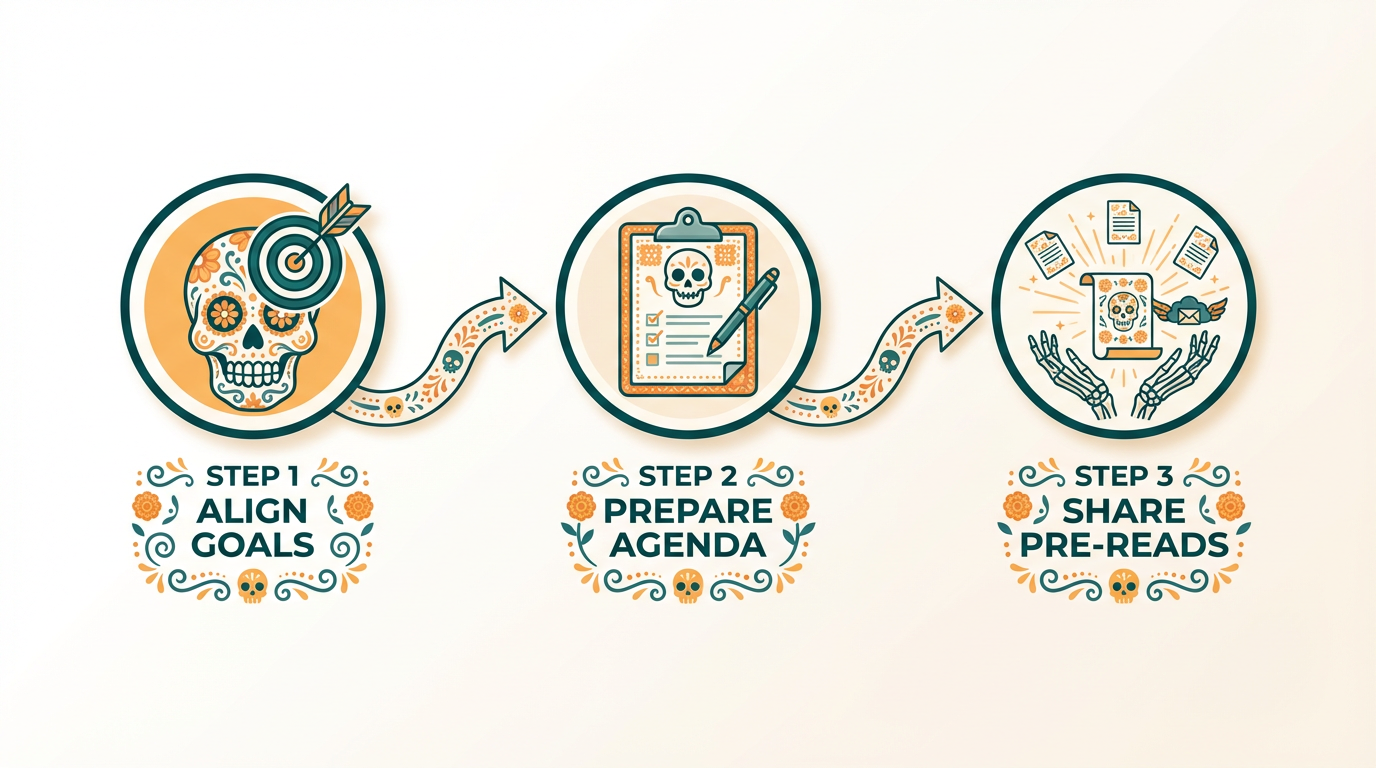
This just goes to show that success is built on alignment, solid prep, and sharing key info before everyone jumps on the call.
Defining Roles and Setting the Rhythm
Once you've aligned on the "what" and "why," the conversation naturally shifts to the "who" and "how." This part of the agenda is absolutely critical for preventing future confusion and setting clear expectations for how you'll all work together.
-
Roles & Responsibilities (15 minutes): Get this crystal clear. Who is the main point of contact on your side? Who is it on the client's side? And, most importantly, who has the final say on approvals? Answering these questions now will prevent countless headaches and bottlenecks later on.
-
Communication Cadence (10 minutes): Agree on how you're going to stay in touch. Will you have a weekly status call? Send updates through a project management tool? A quick email summary? Nail down the rhythm now so communication feels consistent and predictable.
-
Next Steps & Action Items (10 minutes): A meeting without clear next steps is a waste of time. Before you wrap up, assign an owner and a deadline to every single action item. This creates immediate momentum and ensures the project starts moving forward the second the call ends.
Your agenda's job isn't just to talk about the work. It's to build a shared vision of success, a clear plan for communication, and a concrete list of what needs to happen next.
Following a repeatable process like this has a real impact. Using a structured kickoff call template can actually cut project initiation delays by 34% in larger companies. More importantly, getting goals and questions sorted out upfront helps you avoid those costly mid-project changes that derail timelines and blow budgets.
Making Your Kickoff Work for Sales and Onboarding
Let's be real: not all kickoff calls are created equal. A project launch with a partner you've known for years has a totally different vibe than a new customer's first real conversation with your team. A flexible template is a great starting point, but its real magic lies in how you tweak it for specific situations, like a sales kickoff versus a customer onboarding call.
The bones of the meeting might look similar, but the tone, what you're trying to achieve, and the questions you ask will shift—a lot. For your internal sales team, you're trying to fire them up and get everyone pointed in the same direction. For a new customer, your job is to build confidence and give them a clear path to getting value, fast.
Firing Up the Team: The Sales Kickoff Agenda
An internal sales kickoff (SKO) isn't about discovery; it's all about direction and motivation. This is your moment to get the entire team aligned on new targets, fresh strategies, and the big-picture game plan for the year ahead. You need high energy and crystal-clear messaging that gets people excited.
When adapting your template for an SKO, make sure you prioritize:
- Celebrating the Wins: Kick things off by highlighting major achievements from the last quarter or year. It builds incredible momentum.
- Laying Out the Strategy: This is where you clearly articulate the company's vision, where you're focusing in the market, and exactly how the sales team fits into that picture.
- Training and Intel: Carve out dedicated time for new product features, deep dives into competitive intelligence, or walking through updated sales processes.
- Team Building and Recognition: These meetings are perfect for fostering a sense of unity. Publicly recognizing your top performers is a powerful way to motivate the entire group.
Putting this kind of thought into your SKO pays off. I've seen it time and again. Teams that run structured kickoff meetings see a 27% uplift in performance metrics. Companies that adopt this approach often see quota attainment jump from 62% to 89%. Plus, they can cut down planning time by as much as 40%, which frees up leadership to focus on what really matters: execution.
See how it mixes the big-picture strategy with hands-on training and motivational moments? That's how you make sure the team leaves the room feeling both aligned and energized.
Setting New Customers Up for Success: The Onboarding Kickoff
When it comes to customer onboarding, the kickoff call is where the rubber meets the road. All those promises your sales team made? This is where you start making them a reality. The entire point is to manage expectations, build immediate trust, and show the customer a clear, simple path to getting the value they paid for.
The onboarding kickoff is your first, best chance to prove you're committed to the customer's success. It's not about your process; it's about their outcomes.
Your agenda needs to be completely customer-centric, designed to put them at ease and show them you have a solid plan.
- Confirm Their Goals: Start by playing back their key business objectives. It immediately shows you were listening. A great opening question is, "What does a successful first 90 days look like for you?"
- Map Out the Journey: Don't just list tasks. Walk them through the implementation timeline, point out the key milestones, and let them know what to expect at every single stage. No surprises.
- Define Who's Who: Make it incredibly clear who their main point of contact is. Establish a communication rhythm right away, whether it's weekly check-ins or a shared Slack channel.
- Set the Very Next Steps: End the call with simple, actionable tasks for both teams. This creates instant momentum and shows you're ready to get to work.
Turning Kickoff Momentum into Action

There's a special kind of energy that comes from a great kickoff call. But that energy has a short shelf life. If you don't have a solid plan to follow up, all that initial excitement and alignment can just fizzle out. The meeting itself is only half the battle; what you do right after is what turns talk into action.
This is where having a disciplined post-call process is so crucial. Your immediate goal should be to create a single source of truth that documents every decision, action item, and deadline that was discussed. Taking this one step can save you from that painful "I thought you were handling that" conversation a few weeks down the road.
The 24-Hour Recap Rule
The most critical follow-up action you can take is to send a detailed recap email within 24 hours of the call. This is absolutely non-negotiable. If you wait any longer, you're letting ambiguity creep in and the sense of urgency will fade. A fast summary reinforces accountability and proves your team is organized and ready to get to work.
Make sure your recap includes these three things:
- A link to the meeting recording for anyone who missed it or needs a refresher.
- A quick summary of the main project goals that were agreed upon.
- A crystal-clear list of action items, each with a designated owner and a hard deadline.
A kickoff call without a follow-up email is just a conversation. A kickoff call with a follow-up email is the start of a project. It's the first official entry in the project's logbook.
A Follow-Up Email Template You Can Use Today
Don't get bogged down trying to write the perfect email. Clarity and speed are what count here. Here's a simple, effective template you can borrow to keep the momentum going after your next kickoff.
Subject: Recap & Next Steps: [Project Name] Kickoff
Hi Team,
Great connecting with everyone on the kickoff call today! We're all excited to get started on this.
Here's a quick summary of our discussion and the immediate next steps:
- Meeting Recording: [Link to the recording]
- Primary Goal: [State the main project objective in one clear sentence]
- Key Decisions: [Bulleted list of the 2-3 biggest decisions made]
Action Items:
[Action Item 1]- Owner:[Name]- Due:[Date][Action Item 2]- Owner:[Name]- Due:[Date][Action Item 3]- Owner:[Name]- Due:[Date]
We'll be tracking our progress against these tasks in our shared project plan.
Please take a look at the action items and let me know if anything was missed.
Thanks, [Your Name]
Got Questions About Kickoff Calls? We've Got Answers.
Even with the best game plan, questions always come up. It's totally normal to second-guess the details, especially when you're aiming to knock that first big meeting out of the park. I've been there.
Over the years, I've seen the same questions pop up from project managers, sales leads, and customer success folks. So, I've put together some straight-to-the-point answers based on what actually works in the real world. Think of this as your kickoff call cheat sheet.
Who Absolutely Needs to Be on This Call?
Here's a hard-won lesson: keep the invite list tight. When you invite too many people, what should be a hands-on workshop quickly devolves into a one-way presentation. The goal isn't a full house; it's the right people in the room.
Your non-negotiable guest list should always include:
- The Core Project Crew: Your project manager and the key people who will be in the trenches getting the work done.
- The Main Client Stakeholder: You need the primary decision-maker in the room. This is the person who can give a definitive "yes" and clear roadblocks.
- Key Subject Matter Experts: If there's a technical or highly specialized part of the project, get the experts from both sides on the call. No exceptions.
This core group gives you the authority to make decisions and the expertise to execute them, which is the magic combination for avoiding delays down the road.
How Long Should a Kickoff Call Really Be?
The sweet spot? 60 to 90 minutes. This is a realistic block of time that respects everyone's calendar but still gives you enough room to have a real conversation.
Anything less than an hour feels rushed, and you'll inevitably skip over crucial details like the true scope of work or how you'll even measure success. Go over 90 minutes, and you'll watch people's eyes glaze over. Attention spans are finite. A solid 90-minute window gives you plenty of time for intros, a deep dive into goals, a clear talk about who does what, and a solid plan for what happens next—all without burning everyone out.
What's the Single Biggest Mistake to Avoid?
The most common and damaging mistake I see is not clearly defining what success actually looks like for the client. It's so easy to get caught up in tasks, timelines, and deliverables that you forget to align on the business outcomes that matter.
If you walk away from that call without a shared, written-down definition of "done" and "successful," your project is basically flying blind. This one piece of alignment is more important than anything else on your agenda.
Before you let anyone hang up, make sure everyone in that meeting can articulate and agree on the top two or three metrics that will define this project as a win. This simple act elevates your kickoff from a procedural check-in to a genuine strategic alignment that sets you up for a great partnership.
After the call, the real work begins. Distribute turns every customer conversation into a trackable, shareable deal page in seconds. Stop chasing scattered documents and start closing deals with a single, powerful link. Try Distribute free for 7 days and see how much time you can save.
Distribute Team
Content Specialist at Distribute. Exploring the intersection of AI, sales, and buyer enablement.
Related Articles
10 Powerful Sales Discovery Questions to Uncover Buyer Needs in 2025
The quality of your questions dictates the quality of your outcomes. Learn the 10 most powerful sales discovery questions that transform pitches into partnerships.
7 Best Quote Template Examples to Win More Deals in 2025
Transform your sales quotes from tedious documents into powerful closing assets with these 7 strategic template examples and implementation guides.
Build a Better Sales Tech Stack to Close More Deals
A sales tech stack is the collection of software your sales team uses to do their jobs better and faster. Learn how to build one that actually works.