Write Request for Proposal: write request for proposal plan to win top vendors
Learn how to write a request for proposal (RFP) that attracts top vendors and sets your project up for success. Master the strategic blueprint for procurement excellence.
Writing a request for proposal (RFP) isn't just another box to check on your to-do list—it's a strategic move. Think of it less as an administrative task and more as the blueprint for a successful project. A sharp, well-thought-out RFP lays out your goals, scope, and how you'll measure success, heading off costly risks before they even start.
Why a Great RFP Is Your Secret Weapon in Procurement
Let's be honest, drafting an RFP can feel like a major drag. It often seems like a mountain of paperwork separating you from solving a real business problem. But what if you saw it differently? Instead of a bureaucratic hurdle, what if the RFP was your first, and most important, play in the procurement game?
A thoughtfully written RFP does way more than just pull in quotes.

It's the foundational document that gets your internal team on the same page while clearly communicating your vision to the outside world. When you take the time to define your needs with real precision, the proposals you get back are not only better, but they're also actually comparable. This saves you from the headache of trying to weigh apples against oranges because your initial ask was too vague.
The Strategic Advantages of a Well-Written RFP
A truly great RFP forces you to be disciplined and clear. Before you ever talk to a single vendor, you have to sit down and figure out what success for this project actually looks like. That internal alignment alone is priceless.
The process pushes you past surface-level wants to identify the core needs, which helps prevent scope creep and expensive misunderstandings down the road. Plus, a detailed RFP shows top-tier vendors you're a serious and organized partner, making them more likely to put their A-team on your proposal.
A well-structured RFP process is your best defense against project failure. It weeds out the wrong vendors from the start, clarifies expectations for everyone, and creates a clear, objective framework for making a decision you can stand behind.
Getting this right is becoming more critical than ever. The global RFP market is valued at an estimated USD 3.6 billion and is expected to hit USD 6.1 billion by 2030. This growth is all about the increasing need for better, more cost-effective ways to choose vendors, which just goes to show how vital mastering this process is. You can explore the latest RFP market trends to see how procurement is changing.
Setting the Stage for Success
Ultimately, when you put real effort into your request for proposal, you're building the foundation for a strong partnership. It's your chance to tell a clear story about your business, the specific challenge you're up against, and the solution you're aiming for. A good RFP helps you:
- Attract the right partners by spelling out your technical and business needs.
- Minimize project risk by defining the scope and deliverables from day one.
- Ensure a fair comparison by giving all vendors a structured format to respond to.
- Drive business goals by tying the project directly to your company's bigger objectives.
Shift your mindset from "tedious paperwork" to "strategic tool," and you'll start making smarter, more impactful buying decisions.
Setting the Stage Before You Write a Single Word
Let's be honest: staring at a blank document is the worst way to start an RFP. The best requests for proposal—the ones that attract top-tier partners and solve real problems—are built on a solid foundation of internal homework. This groundwork happens long before you even think about writing the executive summary.
If you rush this part, you'll end up with vague requirements and proposals you can't meaningfully compare. Taking the time to get aligned internally is the single best investment you can make in the entire process. It's what separates a strategic document from a hopeful shot in the dark.

Assemble Your Internal Champions
Your first move isn't to write; it's to talk. An RFP written in a departmental silo is almost guaranteed to miss something critical. You need to pull together a cross-functional team of people who will actually be affected by this project.
Think beyond your immediate team. Who else has a stake in this?
- IT and Security: They'll need to vet everything from technical specs and integration points to data security protocols.
- Finance and Procurement: This is their world. They'll be all over the budget, payment terms, and financial viability.
- Legal and Compliance: They're the ones who will have to review contracts, liabilities, and any regulatory red tape.
- End-Users: Don't forget the people who will live with this solution every day. Their practical insights are pure gold.
Get everyone in a room for a kickoff meeting. The goal? Uncover the real problem you're trying to solve. You have to ask the right questions to get past surface-level requests and down to the core business needs.
Don't ask, "What features do we want?" Instead, ask, "What business outcome are we trying to achieve, and what's stopping us?" This simple shift in framing will give you a much stronger, more focused scope of work.
Define What Success Actually Looks Like
Once your stakeholders are on the same page, you need to translate those big-picture goals into something you can actually measure. How will you know, six or twelve months down the line, if this project was a win? Ambiguity is your worst enemy here.
You need a crystal-clear definition of victory before you write a request for proposal. This definition becomes the North Star for your evaluation criteria later on, forcing you to prioritize what truly matters over shiny, nice-to-have features.
For instance, if you're shopping for a new CRM:
- Vague Goal: "We need to get better at managing customer relationships."
- Specific Success Metric: "Reduce our average sales cycle by 15% within the first year."
- Specific Success Metric: "Give each salesperson 5 hours per week back by automating manual data entry."
When you have concrete targets like these, it's a lot easier to look at a proposal and realistically judge whether a vendor can deliver the results you need.
Conduct Smart Market Research
Before you announce your needs to the world, you have to understand the vendor landscape. A little bit of homework here goes a long way in setting realistic expectations for your budget, timeline, and the solutions that are even out there. This isn't about picking a winner yet; it's about understanding the art of the possible.
Start by identifying the major players in the space. Dig into industry reports, find case studies from companies like yours, and spend some time on software review platforms. This will give you a feel for typical cost structures and project timelines—crucial for setting a budget that attracts serious vendors. This foundational work is a key part of getting ready, and you can organize your efforts with a dedicated project readiness checklist to ensure no steps are missed.
This initial research also helps you speak the right language. When your RFP uses industry-standard terms, the best vendors will instantly understand what you need. It also saves you from issuing an RFP with unrealistic demands or a budget that's totally out of whack, which is a surefire way to scare off the very partners you want to attract.
Crafting the Core Components of Your RFP
Alright, you've done the internal legwork. Now it's time to put pen to paper (or, more likely, fingers to keyboard) and build the actual Request for Proposal. This isn't just about listing a bunch of wants and needs; you're creating the very framework that will attract top-tier partners and ensure the proposals you get back are actually comparable. This is where your strategy becomes a tangible document.
Think of each section of your RFP as a chapter in a story, guiding potential vendors from a big-picture view of your company right down to the nitty-gritty details of the project. A well-organized RFP respects everyone's time, cuts through the noise, and sets the foundation for a great partnership before you've even spoken. You want the best companies to want to work with you.

Hook Them with a Strong Introduction
Your introduction is your first impression, so make it count. It should immediately tell vendors who you are, what this project is all about, and why it's an opportunity worth their time. This is your elevator pitch for the entire request.
Kick things off with a quick, engaging summary of your company. Don't just spit out facts; share a bit about your mission and what drives you. This gives vendors a feel for your culture. Then, jump into a concise project overview that frames the problem you're trying to solve and the future you're trying to build.
A great introduction makes a vendor feel like they're being invited to solve an interesting problem, not just bid on a commoditized service. Clarity and purpose here will separate your RFP from the dozens of others they receive.
Define a Crystal-Clear Scope of Work
This section is the heart of your RFP. If you get this part wrong, you're setting yourself up for failure. Ambiguity here leads directly to proposals you can't compare and projects that go off the rails. The scope of work (SOW) has to draw a firm line in the sand, defining the project's boundaries, deliverables, and timeline.
Don't be vague. Break the project down into real, actionable tasks. For example, instead of just asking for "social media marketing services," get specific:
- Develop and manage a content calendar for LinkedIn, Twitter, and Instagram.
- Create 12-15 unique posts per month, including all copy and graphics.
- Deliver a monthly performance report highlighting key metrics like engagement rate and follower growth.
This level of detail means vendors know exactly what they're pricing, which is the best defense against scope creep down the line. For a solid approach to detailing project specifics, understanding the principles behind a Product Requirement Document (PRD) can be a huge help.
Articulate Your Specific Requirements
While the scope defines what you need done, the requirements section details how you need it done. This is where you get into the technical, functional, and security must-haves. The more precise you are here, the higher the quality of the proposals you'll get back.
For technical projects, this is non-negotiable. Don't say you need "a secure website." Spell it out. Do you need it to be "compliant with WCAG 2.1 AA accessibility standards"? Does it have to "integrate with our existing Salesforce API"? Being this direct weeds out vendors who can't meet your core needs from the start. If you're struggling to structure this, a technical requirements specification creator can give you a helpful starting point.
To make this section easy to digest for you and the vendor, a simple summary table can work wonders. It clarifies what matters in each part of the document.
A well-structured RFP typically includes a few essential sections, each with a clear job to do. This table breaks down what they are and why they matter.
Essential RFP Sections and Their Purpose
| RFP Section | Primary Purpose | Key Information to Include | | :--- | :--- | :--- | | Introduction & Background | To provide context and engage vendors. | Company mission, project goals, and a high-level summary of the challenge. | | Scope of Work | To define the project's boundaries and deliverables. | Specific tasks, key milestones, expected outcomes, and project timeline. | | Technical & Functional Requirements | To outline specific capabilities the solution must have. | Mandatory features, performance metrics, integration points, security protocols. | | Submission Guidelines | To ensure all proposals are consistent and complete. | Deadline, format requirements (e.g., PDF), contact person, Q&A period details. | | Evaluation Criteria & Timeline | To provide transparency into your decision process. | Scoring criteria (e.g., cost, experience), key decision dates, contract terms. |
Having this structure in place ensures vendors can easily find the information they need to build a relevant and thorough proposal.
Outline Submission Guidelines and Evaluation Criteria
This final part is all about logistics and being upfront. A clear set of rules creates a level playing field and shows vendors you're organized and professional. Start with the basics: the proposal submission deadline, including the exact date, time, and time zone.
Next, spell out the required format. Do you need a PDF? Should they use an online portal or a specific email address? Who is the single point of contact for questions? Answering these things now prevents a flood of emails and last-minute panic later.
Then, pull back the curtain on how you'll be evaluating proposals. You don't have to reveal your secret formula, but outlining the main criteria helps vendors tailor their responses to what's most important to you. It might look something like this:
- Technical expertise and proposed solution (40%)
- Relevant experience and case studies (25%)
- Cost and value for money (25%)
- Cultural fit and team qualifications (10%)
Finally, give them a timeline. Let vendors know when you'll be in touch, when you might schedule demos, and when you expect to make a final decision. This simple courtesy is a small thing that goes a long way in building a good reputation.
Creating a Fair and Effective Evaluation Framework
Once proposals start hitting your inbox, the real work begins. Collecting bids is one thing, but the true test is sifting through them to find the best long-term partner—not just the cheapest quote. This is where a clear, defensible scoring system becomes your most important tool.
Putting together a structured evaluation framework does more than just simplify your team's decision. It signals to every vendor that you respect the time and effort they poured into their response. That kind of professionalism builds a great reputation and encourages top-tier companies to bid on your future projects.
Moving Beyond Price to True Value
It's always tempting to flip straight to the pricing page, but we all know the lowest bid is rarely the best value. A solid evaluation framework forces everyone to weigh all the critical factors, ensuring the final choice actually aligns with your project goals. The trick is to blend the hard numbers with qualitative insights to get the full picture.
A weighted scoring rubric is the best way to do this. You simply assign a percentage value to different categories based on how important they are. This predefined structure keeps personal bias out of the equation and focuses the review committee on what really matters.
For example, you might decide to weight your criteria something like this:
- Technical Solution and Approach (40%): How well does their plan actually meet the needs we laid out in the scope of work?
- Company Experience and Past Performance (25%): Do they have a proven track record with projects like ours? Can they back it up?
- Total Cost of Ownership (20%): This isn't just the upfront price. It includes ongoing maintenance, support, and any future licensing fees.
- Cultural Fit and Team Expertise (15%): Will our teams work well together? Do their people have the right skills and attitude?
This simple breakdown makes it crystal clear to your team that while cost is a factor, the quality of the solution and the vendor's experience carry more weight.
Designing Your Scoring Rubric
To make those weighted categories work, you need to break them down into specific things you can actually measure. For each criterion, set up a simple scoring scale—say, 1 to 5—where each number has a clear meaning.
Let's drill down into the "Company Experience" category from our example:
| Criterion | Score 1 (Poor) | Score 3 (Average) | Score 5 (Excellent) | | :--- | :--- | :--- | :--- | | Relevant Case Studies | No relevant examples provided. | Provided 1-2 examples with limited detail. | Provided 3+ detailed case studies from our industry. | | Client References | References were unavailable or gave negative feedback. | References were positive but generic. | References provided enthusiastic, specific feedback. | | Years in Business | Less than 2 years in the industry. | 2-5 years in the industry. | More than 5 years with a stable history. |
This detailed approach gives you an objective foundation for discussion. When one person scores a vendor a "5" on case studies and another gives them a "2," it sparks a conversation based on the evidence in the proposal, not just a gut feeling. To make this easier, you can use tools to help build your matrix. Our strategic evaluation criteria matrix creator can be a big help here.
Your evaluation framework is your decision-making blueprint. It should be created before you even receive the first proposal. This ensures your criteria are based on the project's needs, not influenced by a particularly slick presentation from one vendor.
Integrating Qualitative Assessments
But let's be honest—numbers don't tell the whole story. The final piece of your evaluation should always involve qualitative checks like vendor demos, presentations, and team interviews. These meetings are your chance to see what a document can't show you, like their communication style, how they think on their feet, and if they'll be a good cultural fit.
Use these sessions to validate what you read in their proposal. Ask tough questions that tie back to your scoring rubric. If a vendor scored high on their technical approach, have them walk you through a specific workflow during the demo.
This combination of hard data from your rubric and the human insights from your meetings gives you a complete, well-rounded view of each potential partner. It ensures your final decision is not only logical and defensible but also one your whole team can get behind.
Running a Smooth RFP Process from Start to Finish
So, you've put the finishing touches on your RFP. Great work. But now the real challenge begins: managing the process. This next phase is all about clear communication, staying organized, and evaluating every proposal fairly. It's less about perfect prose and more about steering the ship.
Your first job is to control the flow of information. If you have vendors emailing, calling, and sending messages through different channels, you're headed for chaos. You need to establish a single point of contact and a firm timeline right from the start.
Establish Clear Communication Protocols
To keep the playing field level, every vendor needs to get the same information at the same time. This is non-negotiable. It's the only way to prevent one bidder from getting an inside track. The best way I've found to do this is with a formal Q&A period.
Give vendors a hard deadline to submit all their questions in writing. Once that date passes, gather every single question, write out your answers, and compile it all into one document. Then, send that Q&A summary out to all participants simultaneously.
This method keeps things consistent and creates a paper trail, which can be a lifesaver if your final decision is ever questioned. Plus, it saves you from answering the same five questions a dozen times.
Assemble Your Review Committee and Timeline
Evaluating complex proposals shouldn't be a solo mission. You need a team. Pull together a cross-functional review committee with people from the departments who have skin in the game—think IT, finance, and especially the folks who will actually be using the new solution. Their different viewpoints are crucial for making a smart, well-rounded choice.
Once your team is in place, map out a realistic timeline.
- Initial Review: Carve out enough time for each person to read the proposals on their own and score them against the rubric you already built.
- Shortlist Discussion: Get a meeting on the calendar to go over the initial scores and agree on a shortlist of your top 3-4 contenders.
- Vendor Demos: Block out dedicated time slots for the shortlisted vendors to give their presentations. Don't rush this part.
- Final Deliberations: Schedule a final huddle for the committee to discuss the demos, check the scores again, and make the final call.
Stick to these dates. It shows you respect everyone's time—both your internal team and the vendors who put in the effort.
A straightforward evaluation process comes down to three things: having a good rubric, scoring consistently, and making a decision based on the data, not just a gut feeling.
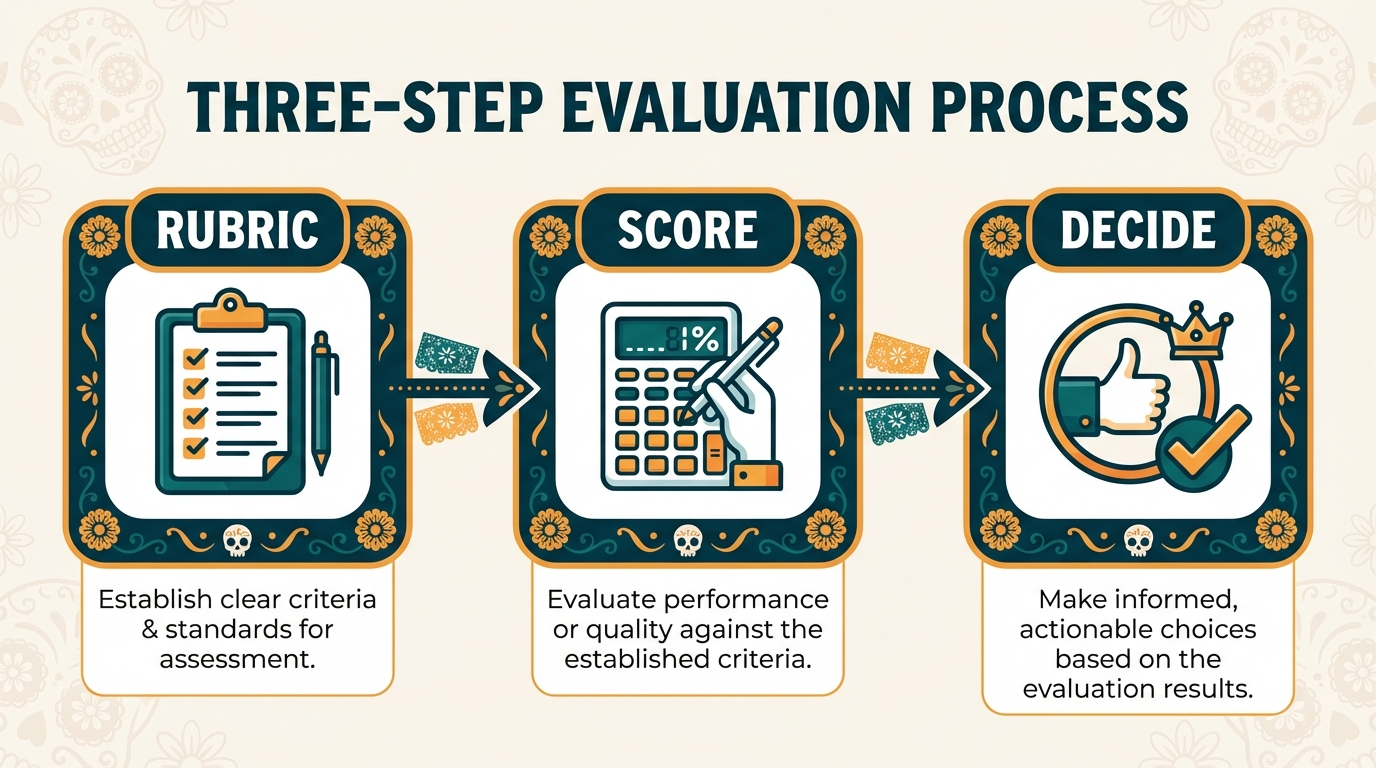
This kind of structured framework is what keeps the process objective and tied directly to what your business actually needs.
Run More Effective Vendor Demos
Vendor demos are where the rubber meets the road. It's your chance to see if the solution is as good as the proposal claims. Don't just sit back and let them run through their standard sales pitch. You need to drive the agenda.
Before they show up, give the shortlisted vendors a handful of specific scenarios or use cases you want to see. For instance, ask them to show you exactly how their tool would handle a process that's a major headache for your team right now. This forces them to demonstrate real-world value, not just talk about features.
A great demo answers the question, "How will this tool solve our problem?" A standard sales pitch answers, "What does this tool do?" Your job is to make sure you get an answer to the first question.
Remember, a ton of work goes into both writing and responding to an RFP. Proposal teams report that a single response takes an average of 23.9 hours of writing time, and these documents often represent a huge chunk of a company's revenue. Given the stakes, running a tight, professional process is the least you can do.
To keep everything running smoothly and manage responses efficiently, using a dedicated tool like the Nextbid procurement platform can make a world of difference.
Common Questions About Writing an RFP
Even with the best template in hand, you're going to hit a few practical snags when you start writing your RFP. It's totally normal. Knowing how to handle these common sticking points ahead of time will help you stay on track and build the document with confidence.
Let's walk through some of the questions I hear most often from teams writing their first (or fiftieth) RFP.
How Long Should an RFP Document Actually Be?
There's no magic number here. Honestly, focusing on page count is the wrong way to think about it. The right length is whatever it takes to give vendors the full picture without overwhelming them.
For a meaty project, like rolling out new company-wide software, you might land somewhere between 15-30 pages. But what really matters is making that content easy to digest. Use clear headings and a logical flow so vendors can jump to the sections they need. A well-structured, comprehensive RFP is always better than a short but confusing one.
What Is the Single Biggest Mistake People Make?
Hands down, it's being vague. Ambiguity is the enemy of a good RFP. When you write something like "we need a user-friendly system," you force every vendor to guess what "user-friendly" means to you. That guesswork leads to proposals you can't compare, pricing that's all over the map, and a final deliverable that misses the mark.
Instead of asking for a 'user-friendly design,' spell it out. For example: "A new user must be able to complete core tasks X and Y with less than one hour of training."
That small shift from a vague wish to a concrete requirement makes all the difference. It ensures every proposal you get back is based on the same reality, not a vendor's interpretation.
How Do I Get Top-Tier Vendors to Actually Respond?
Look, the best vendors are busy. They get dozens of RFPs and can't respond to all of them, so they pick and choose. Your job is to make your RFP look like an opportunity they can't afford to miss. This isn't just about the document; it's about signaling that you run a professional process.
Here are a few things that get serious contenders to lean in:
- Give them enough time. A one-week deadline on a complex proposal says you're either not serious or completely disorganized. Neither is a good look.
- Share your budget. Top-tier firms know their worth and won't waste cycles on a project that doesn't align with their pricing.
- Show them your plan. A clear, transparent evaluation process tells them you're making a fair, structured decision, not just throwing darts at a board.
It also really helps to pre-qualify and personally invite a shortlist of vendors. A direct invitation is way more compelling than a public cattle call and shows you've already recognized their specific expertise.
Should I Include Our Budget in the RFP?
Yes, you almost always should. I know it can feel like you're tipping your hand in a negotiation, but the strategic benefits far outweigh that concern. Think of it as a powerful filter.
Putting a budget range in your RFP saves everyone time by weeding out vendors who are a poor financial fit from the get-go. It also helps the right vendors scope a solution that actually works within your constraints. You'll get back proposals that are far more realistic and relevant.
If you can't share an exact number, a range (like $50,000 - $75,000) or even a tier (e.g., "Project under $100k") works just as well. It's a simple act of transparency that pays off big time.
Instead of chasing scattered PDFs and drowning in follow-up emails, what if you could package every deal into a single, trackable link? With Distribute, you can. Turn every customer call into a shareable digital sales room where pricing, demos, and case studies live in one place. See how teams are saving 90% of their follow-up time and closing deals faster by visiting the Distribute website today.
Distribute Team
Content Specialist at Distribute. Exploring the intersection of AI, sales, and buyer enablement.
Related Articles
The Mutual Action Plan: How to Build a Close Plan Your Buyers Will Actually Use
Stop sending spreadsheets that nobody opens. Here is how to turn your deal timeline into a collaborative roadmap that gets signed.
How to Make a One Pager: Easy Steps + Free Examples
A one-pager is exactly what it sounds like—a document that fits on just one page. It gives a quick look at your product, service, or idea. Learn how to create one-pagers that grab attention and drive action.
A Modern Playbook for Responding to RFPs
Responding to an RFP isn't just administrative work—it's a high-stakes sales play. This framework helps you invest resources where they'll make the biggest impact.